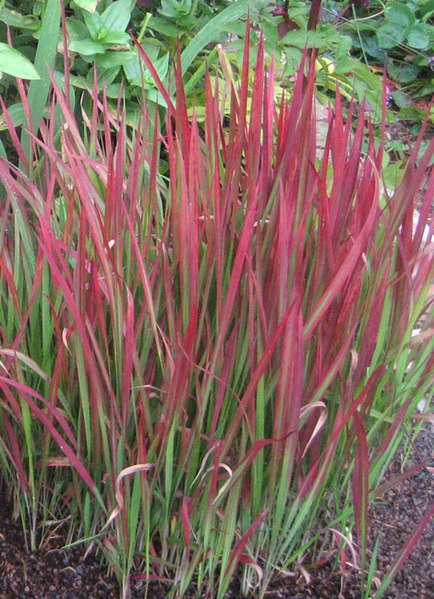
Plants for Fall Color:
to name a few!
Click to view…
Report By Carlotta Lucas
Rhododendrons & Azaleas
What’s the difference between Rhododendrons and azaleas?
Azaleas are Rhododendrons. They belong to the subgenus pentanthera (deciduous) and the subgenus Tsustusti (mostly evergreen).
Azaleas are elepidotes, they never have scales.
Azaleas have five lobes to the flower.
Most azaleas have only one stamen for each lobe of the flower, while most other rhododendrons have two stamens for each lobe.
Azaleas tend to have appressed hairs (hairs that grow parallel to the surface of the leaf). This is particularly true along the midrib of the under-surface of the leaf and is easily seen in the so called “evergreen” azaleas.
Azaleas have tubular funnel or funnel shaped flowers. You need a microscope to see this, but the hair on a “standard” rhododendron will often branch, while the hair on azaleas never does.
Basic Needs:
Rhododendrons must have a constant supply of moisture.
They are sensitive to poorly drained conditions.
Hot wet conditions are more dangerous than cool, wet conditions.
They need an acid soil of pH 5-6.
Fertilizer: A 10-6-4 formula is optimal. For the best growth and flowers apply fertilizer after the plant goes dormant between late Nov and Jan, a second application in Feb or March, a third time in April or May, and a final time in June or July.
Pruning:
Always prune right after flowering. Even large plants can be cut back. Rhododendrons & azaleas flower on the prior year’s wood, therefore the buds for next spring’s flowers form during the previous summer or fall. If you prune them later in the summer, fall or winter you will be trimming off your flowers for the spring.
Prune larger leaved rhododendrons just above the growth joints.
Prune azaleas and small leafed rhododendrons anywhere along the stem. These plants have dormant growth buds nearly everywhere, though you may not be able to see them.
Deadheading and Pinching:
Light pruning and shaping should be done yearly when you deadhead. Snap off the old flower trusses. You may pinch out the single terminal growth buds just as they start to grow. It will make a shorter and bushier plant.
For more information:
American Rhododendron Society
http://www.rhododendron.org/
American Azalea Society
http://azaleas.org/
Definitions:
Elepidotes are large leaved rhododendrons. They are the type of shrub that most individuals would associate as being a rhododendron. They do not have scales located on the underside of the leaves. Plants tend to be very large in their maturity.
Lepidote rhododendron have smaller leaves and are usually low growing or dwarfs. They usually bloom earlier in the spring than the larger leaved elepidotes. Tiny scales cover the undersides of the leaves of some rhododendron species.
CORVALLIS, Ore. – Is this dry winter making you anxious to dig in the dirt again? There’s some good news if you garden in western Oregon and are an optimist.
Cool-season plants can be directly seeded into the ground in March in the Willamette Valley and southern Oregon , said Bob Reynolds, the Master Gardener coordinator for the Oregon State University Extension Service in Jackson and Josephine counties.
Cool-season crops include peas, arugula, carrots, cabbage, cilantro, fava beans, kale, kohlrabi, spinach, chard, turnips and lettuce.
Reynolds said he’s getting questions from the public already about when to start planting and how to tell when soil is ready.
“It depends on how experienced they are and how long they’ve lived here,” Reynolds said. “If they’ve lived here long, then they know a week of 60-degree days doesn’t mean spring is here. You may be anxious, but you hold yourself back.”
Reynolds recommends using a soil thermometer to check your soil temperature to decide whether to dig in. Soil rather than air temperature is the bellwether of whether to plant, he said. Seeds such as peas will germinate at an average soil temperature of about 50 degrees. Each species has different temperature requirements for germination. Generally, cool-season plants can survive air temperatures as cold as 28 degrees, Reynolds said.
Cover the new plantings with clear plastic to protect the soil from getting too saturated by rain.
Snow provides a nice incubator for new plants, acting as a blanket to keep the coldest air from penetrating, Reynolds said.
You can start hand weeding any time. Wait until plants have established themselves before fertilizing them.
As for gardeners in central and eastern Oregon , they’re going to have to be patient. Direct seeding for cool-season crops is not possible until late April or May, said Amy Jo Detweiler, an Extension horticulturist in Redmond . Seedlings can be transplanted in May and June.
“We tell people that March is a good time to clean and sharpen your garden tools and take care of your houseplants,” Detweiler said.
March is also a good time for high-desert gardeners to study seed catalogs and prepare seed tapes. Seed tapes are good for plants that require thinning, such as radishes. To make a seed tape, cut a 2- to 3- inch strip the length of a newspaper or use tissue paper strips, 2-3 inches wide and however long you need it, Detweiler said.
When it’s time to plant, bury the seed tapes in the soil at the seed appropriate depth and the tissue paper or newspaper will break down into the soil, Detweiler said.
By Denise Ruttan, Oregon State Extension
Source: Bob Reynolds, OSU & Amy Jo Detweiler, OSU
This article is online at http://bit.ly/OSU_Gardening2236
BULBS TO PLANT IN THE SPRING
Iris: There are over 200 iris species. Some grow from rhizomes, most common, others from bulbs. Irises do best with plenty of sunlight and planted in soil that is fertile and well drained. Don’t be too generous with fertilizer as it will produce lots of plants and few flowers. Plant iris rhizomes horizontally one foot apart and plant them shallow, just barely cover with soil. When blooms are finished cut faded flowers off to prevent seeds pods from forming, as these pods can weaken the plant. Deer won’t eat iris, so, many gardeners claim irises have no pest except dogs, cats and children, who can jump on them breaking their stems. Irises do not need mulching and they do not like overhead watering.
Crocus: Autumn Crocus (Colchicum autumnale) resembles spring crocuses with white, lavender and rose colored flowers, but they bloom in the fall. You can plant Autumn Crocuses in early spring. They like light, loamy soil with good drainage. Plant them 3-4 inches deep in a sunny location. After blooming, let them die back naturally, do not “mow” them down. The corms should be divided every 3-4 years to stop overcrowding or they will stop flowering. Autumn Crocuses are hardy in zones 5 & 6.
Saffron Crocus (Crocus Sativus) blooms with lavender or white flowers. Sativus’ stigmas (stamens) are the source of saffron, but in case you were thinking of raising them for saffron, it takes thousands of stigmas to produce one ounce of saffron.
Colchicum (Meadow Saffron) and Autumn Crocuses (Colchicum autumnale) are often confused with each other because they are both considered an autumn crocus, and their blooms are very similar. However colchicum is its own genus with at least 15 species, hybrids, and varieties. Colchicums are taller too, growing up to 8” in height and they are more expensive to buy. Be aware that colchicum corms contain a deadly toxic, so wear gloves when working with them.
Autumn Crocus belongs to the Lily family (Liliaceae) along with Lilies, Tulips, and Hyacinths while spring flowering crocuses are a member of the Iris family (Iridaceae) along with Irises and Gladiolus.
Allium: The Allium, which is Latin for garlic, includes chives leeks, shallots, onions and of course, garlic. Some members of Allium family are ornamental perennials which produce globe-like flowers. These flowers can be used in arrangements either freshly cut or dried. Plant ornamental Allium bulbs to a depth that’s 2 -3 times the diameter of the bulb, space them 6-12 inches apart. Plant bulbs in full sun and in ordinary soil. It flowers in many different colors and sizes. They don’t ‘have pests.
Gladiolus: Gladioluses are members of the Iris family, and most of the 200 species are natives to Africa. Their name comes from “gladius”, which is the Latin name for sword because of their sword-like foliage. Their flowers are borne on spikes 1-5 feet tall.
Plant bulbs in a sunny location 3-8 inches deep, and they look best planted in groups of 6-12 plants of the same color, rather than as an individual plant, or in groups of mixed colors.
Lilium: Lilies are among the most beautiful of the summer blooming flowers. Historically, lilies were not easy to grow in North America because, unlike other bulbs, lilies never grow dormant. This made it difficult to ship in good condition and often they were infected with viruses. Then Jan de Graaff, who was born in Holland in 1903, became fascinated with Lilies. In 1928, he started working for the Oregon Bulb Farms, and then in 1924 he bought the company. After making thousands of lily crosses his flower called Enchantment was instantly success so he began marking lilies successfully.
Lily bulbs deteriorate rapidly, so plant right away. Lilies like very well drained acid soil enriched with enough humus to hold the moisture they need. Plant bulbs 5-8 inches in a location with full sun until noon then shade in the afternoon. Lilies do well in large deep planters or pots with good drainage. To discourage diseases water so no moisture stays on the foliage. Fertilize with fish emulsion or seaweed. However, the Madonna Lily and the Turks Cap only need their tops 1‘’ below the soil. . Lilies have a reputation for a short life, therefore the need placing every 3 years.
Dahlias: Few plants offer such a variety of shapes sizes and color and long season of bloom as the Dahlia. It is a member of the daisy family and is a native to Mexico. After the Swedish born botanist Anders Dahl developed several hybrids, the plant was named after him.
Dahlias like rich, deeply tilled, loamy soil and full sun, but protected from winds . Do not plant near trees and other plants that will compete with them. Dahlias over 4 feet tall must be staked because their stems are hollow and brittle. Insert the stake into the ground before planting so you won’t damage the tuber, Dahlias like plenty of nourishment and water, so be sure to give it plenty of compost and manure.
Dahlias that grow over 4 feet tall should be planted 1 foot deep then covered with only 3-4 inches of soil. After the stem break the surface, add more soil, repeat this until the top of the hole is reach. As it grows pinch off terminal buds to stimulate side branching and encourage a more bushy plant. There are also shorter varieties available now which grow only 2 ½ ft. high. These shorter versions can be grown in a large container.
The ground should be warm before planting Dahlias. To plant, lay tubers horizontally 4-6 inches deep and 18 inches apart, and do not water them after planting. Give them a low nitrogen fertilizer, but don’t over feed them, and hand weed only.
Dahlias tubers are “thin skinned”, so they are not has cold hardy as a bulb, therefore it’s recommended they be dug up and store for the winter. However, if you decided to leave them in the ground, cut their stems below the ground level in June. Then in mid-November cover your Dahlia area with plastic to keep the winter rains off of the tubers and add a few inches of leaves, mulch, soil or straw over the plastic to give them extra warmth. Remove this protected cover in March.
by Mary Anne Wallace
By Gena Goddard
Of the 200 or so palm species only a few are able to be grown indoors where the climate is so challenging for any plant. The palm has to adapt to low light, extra dry air, drafts, and being in a confined space. It also should be a slow grower so it stays house size. The following 3 palms have been selected because they are suited for indoor growing and they are commonly sold.
The first is “Lady Palm”, Rhapis excelsa. It grows 6-8ft tall and makes a clump of brown hairy stems with dark green glossy leaves. It grows slowly from underground rhizomes. The leaflets are palmate like “a lady’s hand” and the leaf ends are saw-toothed unlike most palms.
The second is the “Parlor Palm” Chamaedorea elegans. It is the palm seen in Victorian homes in the movies. It is a slow grower, growing to 6-7’. It tolerates low levels of humidity and light, though it prefers medium to high humidity and brightindirect light.
The third is the Kentia, sentry or thatch palm Howea forsteriana. It is a slow grower eventually growing to about 10’ tall. Like the others it tolerates indirect light but needs good drainage.
Care:
I have three Lady Palms which I take outside in a shady place on my deck when the last frost is past, white in our USDA Zone 7B is sometime in late May. Palms can stay outdoors until threatened by frost in Oct/Nov. Before bringing them indoors, prepare them for their winter home by clipping off dead leaves and spraying them off a few times with a strong blast from a hose and inspecting leaves for insects. Inspect all leaves very carefully for any bugs and if you see any spray plant with Safer pest control before bring plants indoors. Place our palms indoors next to the big south facing sunny window and cover any furnace vent openings located close to them with a piece of carpet. They may suffer some indoors during the winter, but they survive so they can thrive and grow next year on my deck.
There are two things I have learned about palms:
1) They do not like to get too dry, so when the soil is dry down to about an inch I water them thoroughly.
2) You can’t prune palms to make them shorter. They only grow from the ends and once that is damaged the whole stem dies. This also means if they get too tall for their space you must give them away, or find a place indoors with more height.
The Ashland Fire Dept is asking residents to seriously consider planting fire resistant plants around their house and property to reduce fire hazards. They are advising homeowners to remove all plants they consider fire hazards and in their place plant firewise plants.
For more information, and to schedule a free wildfire safety home assessment call: Ali True, Ashland Firewise Community Coordinator at 541-552-2231.
Junipers are especially combustible! This drought tolerant ground cover is planted around so many homes in our area the City is requesting they be cleared back 50 feet away from a any structure
Also, the Oregon State University Extension Service has a list of recommended fire-resistant plants which you can obtain from Valley View Nursery, or you can download it here: http://extension.oregonstate.edu/sorec/sites/default/files/fire-resistant_planting_wd_2011.pdf
The following is a short list of recommended firewise plants:
Ground Covers:
Kinnikinnick and Creeping Oregon Grape both look good year round and prefer sun or part sun. For shady areas, plant Japanese Pachysandra.
Perennials:
Firewise perennials plants: Yarrow (note: can spread), Cone flower, Iris, Oriental poppy , Russian sage, Lamb’s ear, and Cranesbill.
Shrubs:
Burning bush, Rockrose, Ferns, Witch Hazel, Heavenly Bamboo, False Holly, Pieris, Potentilla Fruticosa, Rosa Rugosa, Lilac, Viburnums, Sweetspire and Cotoneaster.
Regina, at Ray’s Nursery, highly recommends the following plants because they are not only fire-resistant, they are very attractive, easy to grow and deer resistant.
Cotoneaster Dammeri
Plant Type: Evergreen, groundcover, shrub
Size: 2ft tall 6ft wide
Bloom Time: Late Spring
Flowers: White
Exposure: Full sun
Attributes: Fall color & red berries, Deer resistant, Attracts Birds, drought tolerant once established. Grows fast.
USDA Zone: 5-8
Itea Virginica (Little Henry Sweetspire)
Plant Type: Deciduous Shrub
Size: 2 ft High 3ft Wide
Bloom Time: June – July
Flowers: Fragrant white sprays
Exposure: Part to full sun
Attributes: Attracts butterflies, Bright red fall foliage, Deer resistant, North America Native. Needs moist soil.
USDA Zone: 5-9
Horticultural Report by: Mary Anne Wallace
Article written by: Carlotta Lucas